Dial Before You Dig still exists in NSW, under a new name: Before You Dig Australia (BYDA). The state and national Dial Before You Dig groups merged into one organisation, and the referral service kept running through the change. You lodge one free enquiry for your dig site, and the companies that own pipes and cables there send you their plans.
The plans are where a safe dig starts, not where it ends. They show what an asset owner has on record near your site. They do not show exactly where a pipe or cable sits, or how deep it is. That gap is closed on site: you check the plans, look for clues, locate and mark the services, and expose them before the machine goes in. That last step is our work. Rapid Vac Trucks Newcastle sends a vac truck with an experienced operator who uncovers each service with water and suction.
Key takeaways
- Dial Before You Dig is now Before You Dig Australia, and lodging an enquiry is free.
- In NSW you must take all reasonable steps to get current underground services information before excavation starts.
- Plans show what is recorded nearby, not the exact line or depth of each service.
- Check every response and its expiry, then locate and expose the services before you dig.
Is it still called Dial Before You Dig?
People still say Dial Before You Dig, and that is fine, but the service is now Before You Dig Australia. Older paperwork, including the SafeWork NSW Code of Practice: Excavation work, still uses the old name. SafeWork NSW's own construction page now tells you to contact Before You Dig Australia before you start work.
BYDA is a single point of contact. You lodge one enquiry through the BYDA website or app, and it refers your site to every registered member whose assets may be affected. Around Newcastle and Lake Macquarie that usually means the electricity network, water and sewer, gas and telecommunications. Homeowners can lodge too, and BYDA suggests agreeing who will lodge before any contractor starts digging on your property.
Is Dial Before You Dig free?
Yes, lodging an enquiry is free. BYDA's FAQs say asset owners may charge for information in some cases, normally large development enquiries or planning and design work where no digging is happening. BYDA also warns that some outside companies charge to get plans for you, which is unnecessary when you can lodge directly.
What NSW requires before you dig
In NSW you must take all reasonable steps to get current information about underground services before excavation starts. The SafeWork NSW excavation code says a person with management or control of the workplace must take all reasonable steps to get current information about underground essential services where the digging will happen, and in the areas next to it. Essential services include gas, water, sewerage, telecommunications, electricity, chemicals, fuel and refrigerant in pipes or lines.
The same code sets out what happens to that information:
- It goes to the principal contractor or the excavation contractor (or both), and should reach subcontractors and plant operators.
- It is made available to every worker and kept ready for inspection.
- It is kept until the excavation work is finished, or for two years after a notifiable incident on that work.
Ausgrid, which runs the electricity network across Newcastle and the Hunter, adds a time limit. Its page on working near underground cables says NSW legislation requires its cable plans to be no more than 30 days old when excavation starts. Other owners set their own expiry, so check the date printed on each response.
How to lodge a Before You Dig enquiry
Lodge at least one day before the job, and earlier if you can. BYDA's duty of care guide asks for one day as a minimum. Plans often arrive within minutes, but BYDA says to allow up to two business days, and Ausgrid says its plans should arrive within three working days.
When you lodge, BYDA asks you to:
- Find the site by street address, lot number or coordinates.
- Draw the work area on the map.
- Give the start and end dates and the type of work.
- Say whether you are working for a utility, a council or a private client.
- Describe the job in enough detail for each owner to respond properly.
You then get a confirmation email listing every affected asset owner and their contact details. Keep that sheet with the plans on site. If an owner has not responded within two business days, BYDA says to contact them directly and quote their sequence number.
What the plans show, and what they don't
A BYDA plan tells you a service is there, roughly where it runs and how to work near it. BYDA's own guide says plans indicate the presence of infrastructure and not its exact location, and should only be used as a guide.
| On the plans | Not on the plans |
|---|---|
| Registered pipes and cables near your site | The exact position of each pipe or cable |
| The owner's instructions for working near them | A reliable depth (never assume one) |
| Contact details and, for gas, pressure details in the legend | The full domestic connection inside the property |
| An expiry date for each response | Services owned by anyone who is not a BYDA member |
A few points catch people out:
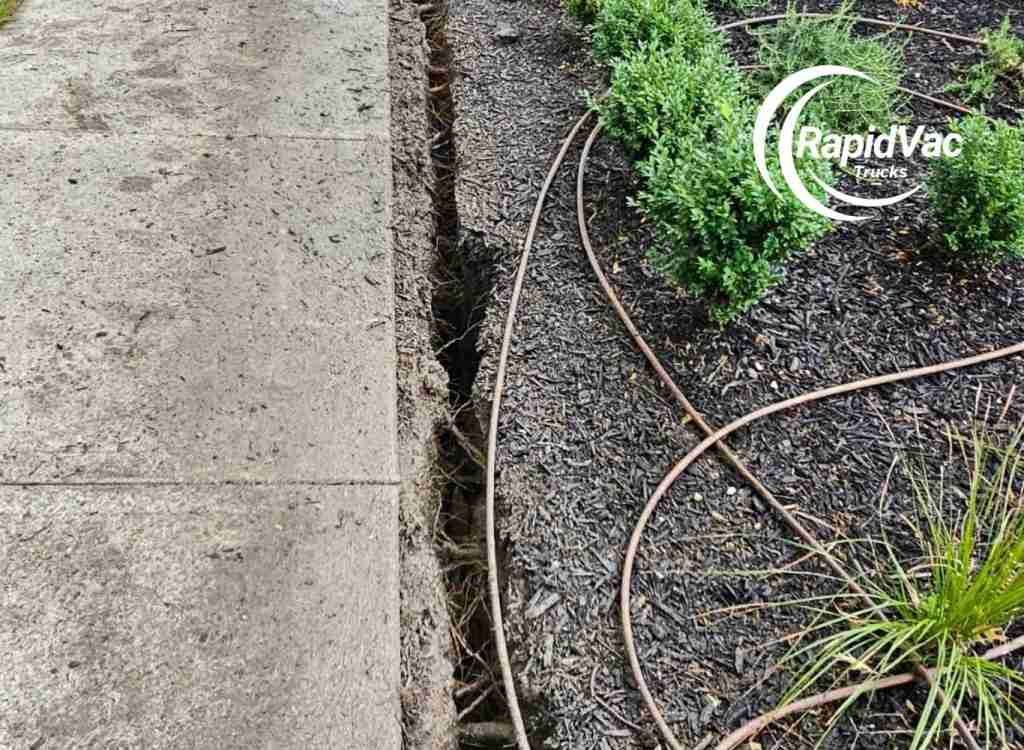
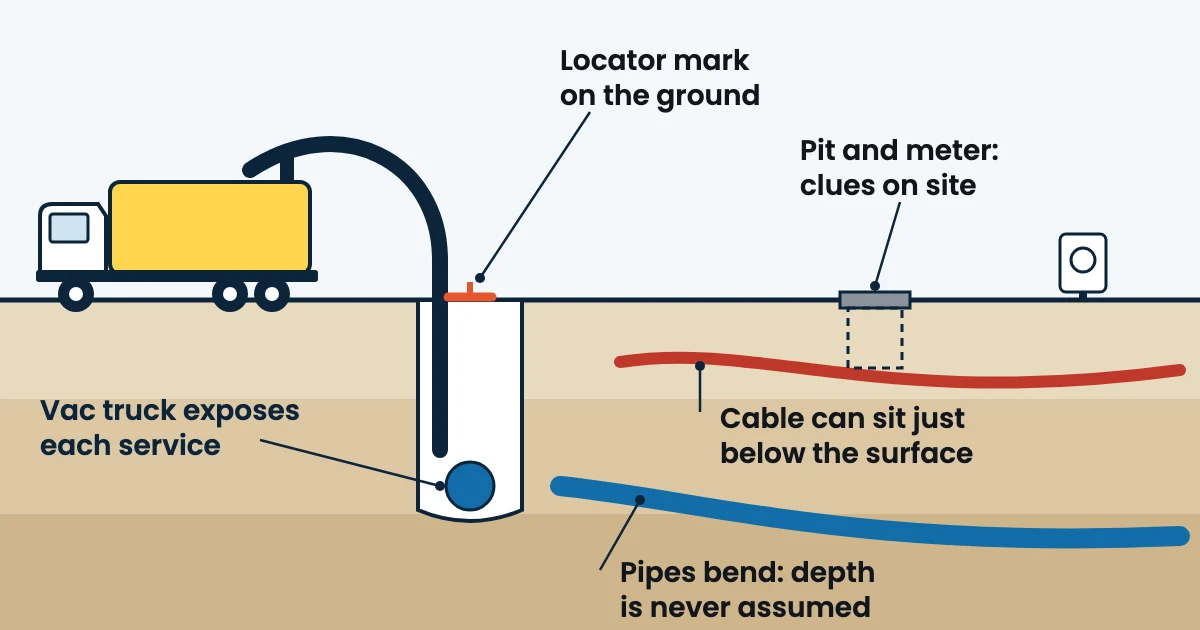
- Pipes and cables do not always run straight. They were laid around whatever was in the way at the time, so never assume the line or the depth. BYDA's homeowner guide notes they can sit just below the surface. Our guide to how deep services are buried in NSW lists the typical depths by service.
- Private lines are usually missing. BYDA says the plans generally show the service delivered to the property, not the whole domestic connection, and may not show detail inside the boundary.
- Not every owner is a member yet. Most are, and BYDA is still signing up the rest.
- Getting every response is not approval to dig. Each owner's directions still apply, and many have their own steps for locating or working near their assets.
Overhead lines matter too. BYDA's free Look Up and Live tool shows where powerlines run, which helps you place the truck, the boom and any plant.
From plans to a safe dig
The plans are step one of five. SafeWork NSW's code says the available information may not be accurate, so excavation should begin with an initial check of the area, for example exposing a short section of the services using water pressure and a vacuum system.
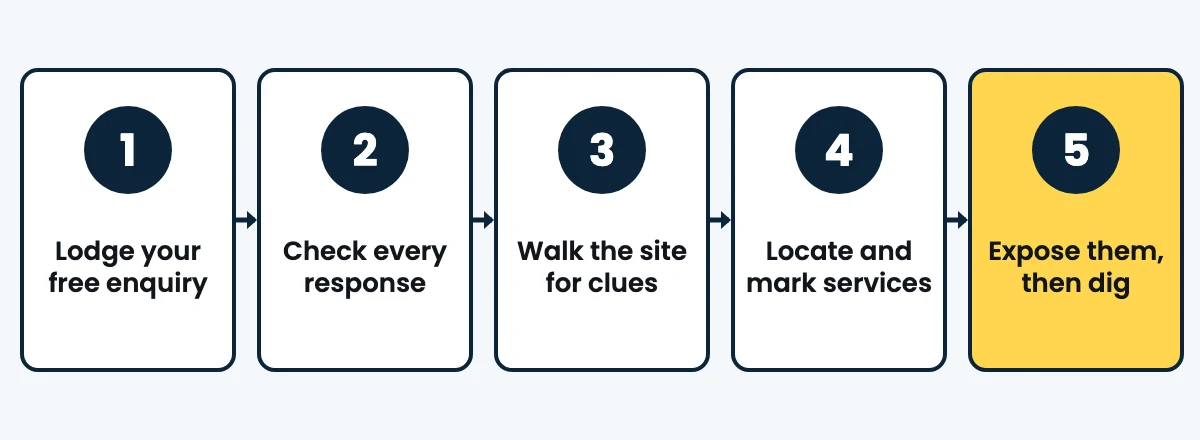
- Lodge your free enquiry with the work area drawn accurately.
- Check every response. Count them against the confirmation sheet, read each owner's instructions and note the expiry dates. Lodge again if your scope changes or a plan lapses.
- Walk the site for clues. BYDA lists pits, marker posts, warning signs, meters and inspection points. Check each one against the plans before anyone digs.
- Locate and mark the services. A trained locator traces them with an electromagnetic locator or ground penetrating radar and marks them on the ground. Our service locator and ground penetrating radar work can be booked first.
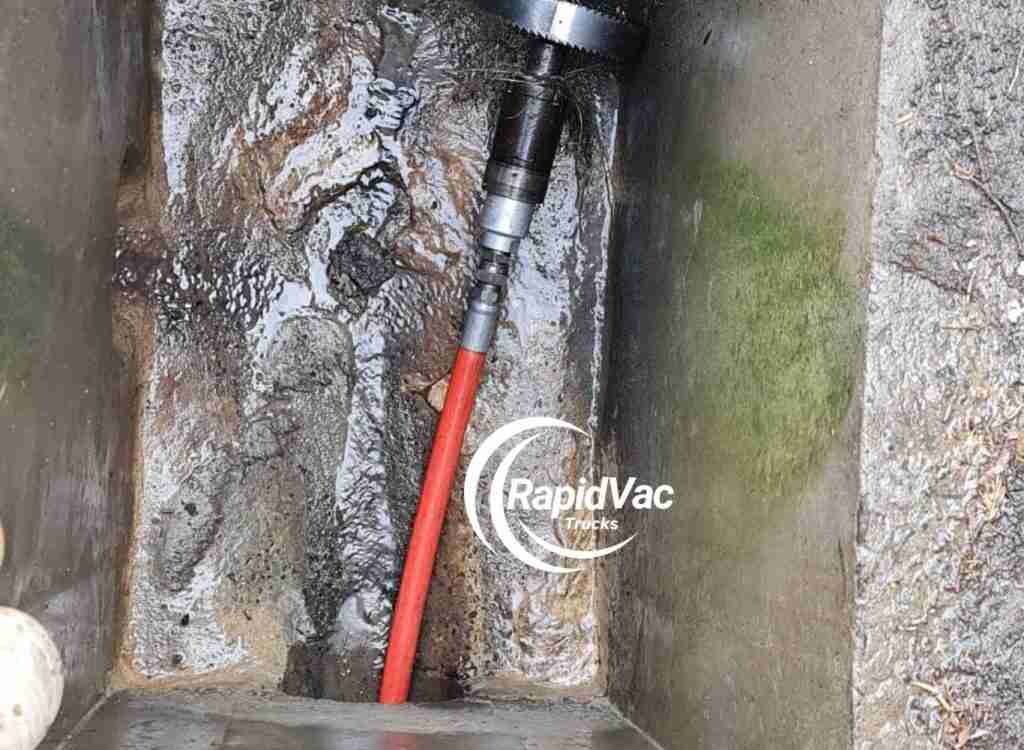
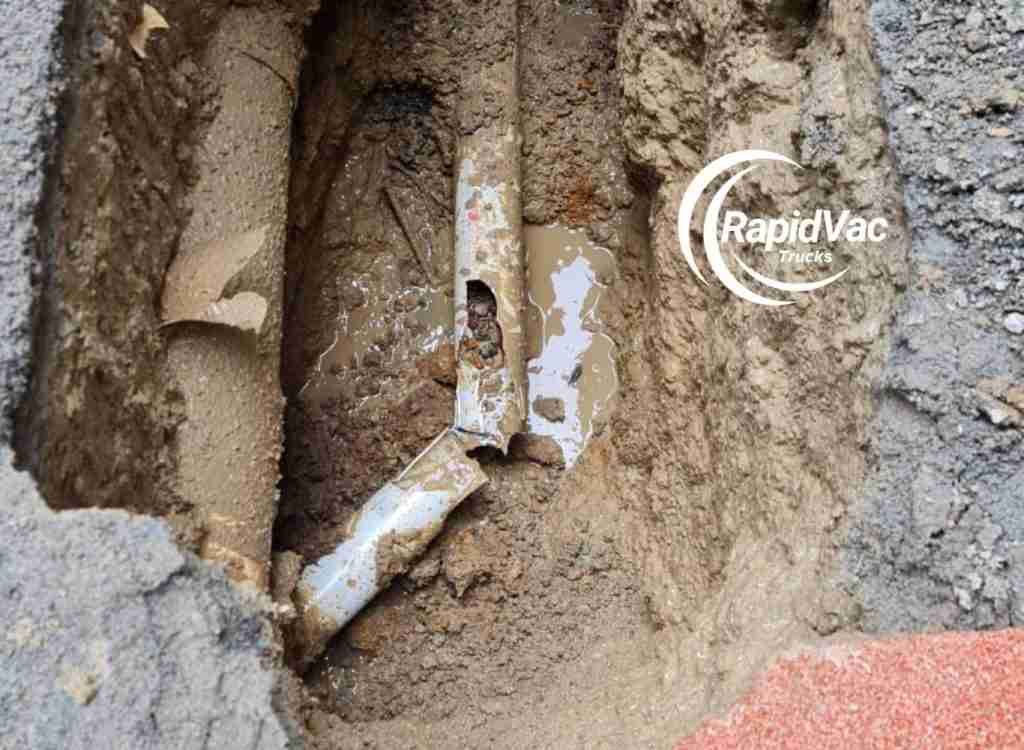
- Expose them, then dig. BYDA's duty of care guide says that, where appropriate and safe, it is the excavator's responsibility to expose the cable or pipe using hand digging tools. SafeWork NSW's code also describes exposing services with water pressure and a vacuum system, which is what a vac truck does: each service is uncovered without a bucket near it, and its depth recorded before the main work starts.
Our guide to potholing in Newcastle explains that last step in detail, including what gets recorded.
Plans in hand? Book the crew that exposes the services
Call the Newcastle team, or send your plans and photos and we will plan the vac truck and operator around your job.
What to send us with your plans
Each job is planned from the site details you send. If you have your Before You Dig responses, you already have most of what we need:
| What to send | Why it helps |
|---|---|
| Site address and the work area | Sets the truck position and hose route |
| Every BYDA response and the confirmation sheet | Shows which services to expose and each owner's conditions |
| Any locator or GPR mark-out | Tells the operator where to start, or we can arrange it first |
| What you are building and how deep you will dig | Sets how many services to expose and to what depth |
| Access, surfaces and overhead obstacles | Gates, slabs, asphalt and powerlines all shape the set-up |
| Your safe work method statement (SWMS) and induction details | So the crew can start on time |
Call (02) 4012 2214 to talk it through, or upload your plans and photos with the quote form. Our site preparation checklist covers access and set-up, and you can read more about our vacuum excavation and non-destructive digging work.
The rate and any minimum charge are confirmed in the quote. The Newcastle team offers a 24/7 service, including on-site attendance for urgent and after-hours jobs. Timing depends on the job, its location and the schedule, and is confirmed when the work is scoped.
If a service is damaged, tell the asset owner straight away. BYDA says you must, and the owner's contact details are on your confirmation sheet. In a life-threatening situation, call 000.
Dig with the services already exposed
Rapid Vac Trucks Newcastle works across Newcastle, Lake Macquarie, Charlestown, Mayfield, Glendale, Warners Bay and Maitland. Send your Before You Dig plans and we will take it from there.
Frequently asked questions
Do asset owners ever charge for plans?
Lodging a Before You Dig Australia enquiry is free. Some asset owners may charge for information on large development or design-only enquiries where no digging is happening.
How long are Dial Before You Dig plans valid?
It depends on the asset owner, and the expiry date is printed on each response. Ausgrid says NSW legislation requires its cable plans to be no more than 30 days old when excavation starts. If a plan expires or your scope changes, lodge a new enquiry.
How long does it take to get the plans?
Plans often arrive within minutes. BYDA says to allow up to two business days, and Ausgrid says its plans should arrive within three working days. Lodge at least one day before the job.
Do the plans show how deep a pipe or cable is?
You should not rely on them for depth. BYDA says never to assume the depth or line of pipes and cables. The reliable way to confirm it is to expose the service, which is what a vac truck crew does before the main dig.
Is Dial Before You Dig mandatory in NSW?
In practice, yes. NSW law requires the person managing the work to take all reasonable steps to get current underground services information before excavation starts, and Before You Dig Australia is the free way to get it. SafeWork NSW tells you to contact BYDA before you start work.
Do I still need a locator if I have the plans?
Usually, yes. The plans are a guide, so services are traced and marked on the ground and then exposed before digging. BYDA also says to engage a locator if an asset owner instructs you to.
This guide is general information, not safety or legal advice. Rules and asset owner conditions change, so check your Before You Dig Australia responses, the current SafeWork NSW codes and each owner's instructions for your site before work starts. SafeWork NSW and Ausgrid sources were checked in November 2026, and Before You Dig Australia guidance as published in 2026.